How Stem Cell Therapy May Support Faster Rehabilitation
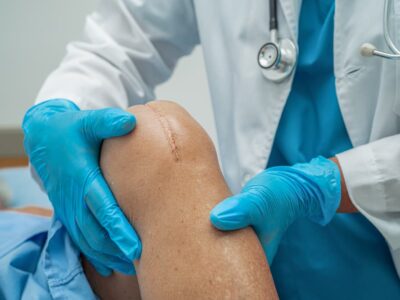
Recovery is rarely limited by a single damaged structure. A torn tendon, a worn joint surface, or a surgical repair may set the problem in motion, but the real rehabilitation challenge usually includes inflammation, pain, weakness, stiffness, altered movement patterns, and a nervous system that has started protecting the area. That is why some patients heal on schedule yet still struggle to regain full function, while others progress quickly and seem to reclaim confidence almost as fast as they regain strength.
Stem Cell Therapy has drawn attention because it may influence more than one part of that picture. The interest is not just about tissue repair in the narrow sense. It is about whether biologic treatment can create a better environment for rehabilitation, one where pain settles earlier, swelling resolves more efficiently, and exercise becomes productive sooner rather than later. That possibility matters to athletes trying to return to play, to workers who need to tolerate long hours on their feet, and to older adults who simply want stairs, sleep, and daily movement to feel manageable again.
The most important point, however, is restraint. Stem cell treatment is not a universal accelerator pedal. It does not replace skilled physical therapy, sound surgical decision-making, or the basic biology of healing. In the right patient, with the right diagnosis and realistic timing, it may support rehabilitation. In the wrong setting, it can add cost, complexity, and false hope.
Why rehabilitation sometimes stalls
Most people imagine recovery as a straight line. Tissue is injured, treatment is given, and then the body steadily improves. Anyone who works in orthopedics, sports medicine, or physical rehabilitation knows it is more uneven than that. Progress often slows because one bottleneck starts driving the whole process.
Pain is a common example. When pain remains high, patients guard. They shorten stride length, stop loading a limb fully, avoid end ranges of motion, and tense surrounding muscles. That guarding then feeds stiffness and weakness. A repaired shoulder that is structurally intact can still lose ground if pain prevents consistent motion work in the first month. A knee with mild cartilage injury can become functionally worse if recurring swelling inhibits the quadriceps and makes basic strengthening feel threatening.
Inflammation can be another brake on recovery. Acute inflammation is part of normal healing, but prolonged or poorly regulated inflammation changes the rehabilitation landscape. Joints stay puffy. Tendons remain irritable after ordinary loading. Sleep suffers. Sessions that should build capacity instead trigger flare-ups. When that cycle takes hold, even a thoughtful rehab plan can feel like one step forward and one step back.
Then there is tissue quality. Some injuries occur in areas with limited blood supply. Some patients have age-related degeneration or metabolic factors that blunt the pace of healing. Others are returning after repeated injury, where the local tissue environment is not the same as it was the first time around. In these cases, conventional rehabilitation may still help, but it may need more time and more careful dose control.
Where Stem Cell Therapy enters the picture
Stem Cell Therapy is generally discussed as a regenerative treatment, but that phrase can be misleading if it suggests instant rebuilding of complex tissue. In practice, the more defensible concept is that stem cells may support healing through signaling effects. Depending on the source and method used, these cells may release bioactive factors that help regulate inflammation, support local repair processes, and influence the behavior of surrounding cells.
That distinction matters. Patients often come in asking whether stem cells will “grow a new meniscus” or “replace arthritis.” Those expectations are usually too blunt. A better question is whether the therapy may improve the biologic conditions around an injury or degenerative area enough to make rehabilitation more effective.
For example, if knee pain decreases and post-activity swelling becomes less frequent, the patient can usually train more consistently. If a tendon becomes less reactive to load, strengthening can progress instead of getting repeatedly scaled back. If shoulder irritation calms after a procedure, range-of-motion work may be tolerated earlier and with less guarding. In those scenarios, the treatment is not doing rehab’s job. It is potentially making rehab easier to do well.
The mechanisms that could support a quicker return to function
Speed in rehabilitation does not necessarily mean faster tissue maturity under a microscope. More often, it means a faster return to useful function. A patient who can squat comfortably, climb stairs without compensation, or sleep through the night may appear to be healing faster because the functional barriers are lower.
Several pathways may explain how Stem Cell Therapy could contribute to that effect.
First, modulation of inflammation may reduce the constant irritability that keeps patients from loading the area. That can be especially relevant in certain joint and tendon conditions where the problem is not only structural damage but also an unhelpful inflammatory environment.
Second, local signaling may support repair activity in surrounding tissues. This is one reason biologic treatments are often discussed in the context of partial tendon injuries, cartilage lesions, and some overuse conditions. The hope is not magic regeneration, but a more favorable healing response.
Third, some patients experience pain relief that is meaningful enough to change behavior. Pain is not merely a symptom. It shapes movement, effort, and confidence. A reduction from severe daily pain to moderate intermittent pain can change rehab compliance overnight.
Fourth, better symptom control often means fewer setbacks. Rehabilitation timelines are frequently extended not because the program is wrong, but because flare-ups force repeated resets. If those spikes become less common, the cumulative gain over six to twelve weeks can be substantial.
Conditions where the idea is most discussed
Much of the practical discussion around Stem Cell Therapy centers on musculoskeletal rehabilitation. Knees are a common focus, especially in patients with early to moderate degenerative change, focal cartilage issues, or persistent symptoms after conservative care. Shoulders also come up regularly, particularly with partial rotator cuff pathology or stubborn tendinopathy. In sports medicine, there is continued interest in whether biologics can help selected soft-tissue injuries tolerate progressive loading sooner.
That said, the evidence is not equally strong across conditions. Some problems are more biologically plausible targets than others. Mild to moderate joint degeneration may respond differently than advanced bone-on-bone arthritis. A partial tendon injury is a different category from a complete rupture that clearly needs surgical repair. A younger https://maps.app.goo.gl/4UL8tVh2NYvJpBTF7 athlete with a contained cartilage lesion is not the same as an older patient with years of diffuse wear and altered gait mechanics.
Neurologic rehabilitation is another area where people ask about stem cells, particularly after spinal cord injury or stroke. The scientific interest is real, but this space is more complex and, in many settings, more experimental. It demands especially careful expectations, strict medical oversight, and honest discussion about uncertainty.
What faster rehabilitation actually looks like in practice
It is easy to talk about recovery in broad terms. What matters in clinic is whether a patient can do more, sooner, and with better quality. Faster rehabilitation does not always mean fewer calendar weeks from injury to discharge. Often it means reaching key milestones with less friction.
Consider a middle-aged recreational tennis player with persistent lateral elbow pain who has already tried rest, bracing, and basic exercises. If a biologic treatment reduces local irritability, the player may finally tolerate eccentric loading and grip work without pain spiking for three days afterward. That does not make the tendon instantly normal, but it can turn a stop-start rehab course into a steady one.
Or think about a patient after knee surgery who is limited by swelling and quadriceps inhibition more than by the repair itself. If the joint environment becomes quieter, extension work, gait training, and strength progressions may become more productive. In those cases, the visible improvement is often not dramatic from one day to the next. It shows up as fewer cancellations, smoother week-to-week gains, and less fear around movement.
Patients usually notice the small things first. Getting out of a chair without bracing on the armrest. Walking through a grocery store without scanning for the nearest bench. Turning in bed without waking up from shoulder pain. Those changes may sound modest, but they often mark the point when rehabilitation starts building momentum.
Timing matters more than most patients expect
One of the most common misunderstandings is that Stem Cell Therapy can be inserted at any point with equal value. Timing influences what the treatment is trying to accomplish and how rehabilitation should be adjusted afterward.
Very early after an injury, the body is already organizing its healing response. In some cases, that period may be appropriate for biologic support. In others, clinicians may prefer not to intervene until imaging, symptoms, and mechanical stability are better defined. Too early, and the diagnosis may still be fuzzy. Too late, and months of disuse, compensation, and chronic pain behavior may be driving the dysfunction as much as the original tissue problem.
Post-procedure rehabilitation also matters. Patients sometimes assume the injection or treatment itself is the main event. It is not. The days and weeks afterward usually require a specific loading plan. Some tissues need a short protection window before progressing. Others benefit from controlled movement relatively early. If patients return immediately to provocative activity because symptoms temporarily feel better, they can easily outpace the biology.
A useful rule is that biologic treatment should fit into a rehabilitation strategy, not sit beside it as an isolated add-on.
What a well-managed rehab plan often includes
When Stem Cell Therapy is part of treatment, the rehabilitation plan usually works best when it is coordinated rather than generic. The exact details vary by diagnosis and procedure, but several principles show up repeatedly:
- a clear protection period, if needed, so the treated area is not overloaded too soon
- symptom-guided progression of range of motion and strength
- close monitoring of swelling, soreness duration, and function between sessions
- gradual return to impact, speed, or sport-specific work rather than abrupt testing
- regular communication between the procedural clinician and the rehabilitation team
None of these are glamorous. They are simply the details that separate a promising treatment from a disappointing one. When the plan is vague, patients either do too little out of fear or too much out of impatience.
The trade-offs that deserve honest discussion
A professional conversation about Stem Cell Therapy has to include its limits. Cost is the most obvious. These treatments are often expensive, and insurance coverage can be inconsistent or absent depending on the indication and setting. That alone changes the value equation. A patient with a relatively straightforward condition may do very well with a disciplined rehabilitation program, activity modification, and time, without needing a biologic procedure.
There is also variability in protocols and products. Not every clinic uses the same source material, processing method, or patient selection criteria. Even among reputable providers, there can be real differences in how treatment is approached. That makes broad promises especially unreliable.
Response is another issue. Some patients improve meaningfully, others only modestly, and some not at all. The frustrating part is that the non-responders are not always predictable in advance. Imaging findings help, but they do not tell the whole story. A patient with mild structural change and severe deconditioning may need movement retraining more than biologic intervention. Another with localized tissue pathology and otherwise good mechanics may be a better fit.
There are procedural considerations too. As with other injections or interventional treatments, there can be post-procedure soreness, a temporary increase in symptoms, and standard medical risks that should be reviewed carefully by the treating clinician. If someone is medically complex, on certain medications, or has a condition that alters healing, the calculus changes again.
Who tends to be a better candidate
No single profile guarantees success, but some patterns are more encouraging than others. Patients often do better when there is a defined target, a realistic rehabilitation plan, and enough baseline capacity to participate in that plan. Localized pain generators are generally easier to work with than diffuse, long-standing pain that involves multiple regions and sensitization.
The following features often make the conversation more productive:
- symptoms that match a specific diagnosis rather than a vague pattern of widespread pain
- imaging and examination findings that support a treatable local tissue problem
- willingness to follow a structured rehabilitation progression afterward
- goals tied to function, such as walking, lifting, or returning to sport, rather than a promise of perfect tissue restoration
- acceptance that improvement may be partial, not absolute
That last point is crucial. For many patients, a 30 to 50 percent reduction in pain combined with stronger function is a very good outcome, especially if it delays or avoids more invasive treatment. People often dismiss “partial improvement” until they realize it means sleeping better, training regularly, and getting through work without constant symptom management.
How clinicians judge whether it is helping
Patients understandably focus on pain, but experienced rehabilitation teams look at a wider set of markers. Pain matters, yet function tells the more reliable story.
A knee patient who reports mild soreness but can now descend stairs normally is probably improving. A shoulder patient whose pain score has barely changed but who gains overhead reach, better scapular control, and more tolerance to strengthening may also be on the right track. By contrast, a patient who says the area “feels looser” but still cannot progress basic loading after several weeks may not be getting the expected benefit.
Clinicians also track the pattern of soreness. Productive rehabilitation usually causes manageable discomfort that settles within a predictable period, often within a day. Trouble shows up when each progression causes prolonged flares, swelling, or reduced function for several days. If those episodes become less frequent after treatment, that is often one of the first practical signs of benefit.
Questions patients should ask before proceeding
A thoughtful consent process is often more revealing than the treatment brochure. Patients do better when they ask specific questions and expect specific answers.
- What is the exact diagnosis you are treating?
- What improvement are you realistically hoping for: less pain, better function, delayed surgery, or something else?
- How will my rehabilitation change after the procedure?
- What signs would tell us the treatment is working, and by when?
- If it does not help enough, what is the next reasonable option?
These questions shift the conversation away from hype and toward decision-making. They also expose whether the provider has a coherent plan. If the answer to every concern is simply “we will see,” caution is warranted.
The role of expectation, motivation, and behavior
One of the quieter truths in rehabilitation is that treatment effects are amplified or undermined by behavior. A patient who receives Stem Cell Therapy but sleeps poorly, stops moving, skips therapy, and tests the joint with high-demand activity every weekend is not giving the intervention much of a chance. On the other hand, a motivated patient with realistic expectations often gets more out of even modest symptom relief, because they convert that window of opportunity into consistent strength and movement gains.
This is where experience really shapes judgment. Some patients need the biologic boost to break a plateau. Others are better served by refining load management, strengthening neglected muscle groups, improving body composition, or simply giving a conservative program enough time to work. The challenge is distinguishing between biological limitation and rehabilitative underdosing, or overdosing, before adding a costly intervention.
A measured place for Stem Cell Therapy in modern recovery
The strongest case for Stem Cell Therapy is not that it replaces established rehabilitation, but that it may support it under the right circumstances. When symptoms, tissue biology, and functional goals align, it can help create a more favorable setting for progress. Less pain, less reactive inflammation, and fewer setbacks can translate into better training tolerance, steadier gains, and a quicker return to meaningful activity.
That said, faster rehabilitation is not a guarantee, and speed alone is not the right goal if it comes at the expense of tissue tolerance or movement quality. The best outcomes usually come from careful diagnosis, disciplined follow-through, and honest expectations. Patients rarely need a miracle. More often, they need enough improvement to move well again, trust the injured area again, and build capacity without constantly being dragged backward by pain or swelling.
Used selectively and managed well, Stem Cell Therapy may help some people do exactly that.
Denver Regenerative Medicine | Stem Cell Therapy, HRT, Testosterone Clinic
Address: 5040 Corporate Plaza Dr Ste 7, Colorado Springs, CO 80919
Phone number: +17205831648
FAQ About Stem Cell Therapy
What are the negative side effects of stem cell therapy?
Stem cell therapy can cause mild short-term reactions like injection-site pain, fatigue, and low-grade fever. More serious risks include infection, immune system rejection, blood clots, unintended tissue growth or tumors, and severe complications from unproven treatments at unregulated clinics.
What diseases can stem cells cure?
Currently, stem cells routinely and effectively cure specific blood cancers, immune deficiencies, and blood disorders using established bone marrow or cord blood transplants. Most other applications—such as for Parkinson's, diabetes, or heart failure—remain experimental or in clinical trials rather than proven cures.
Do stem cell treatments really work?
Yes, stem cell treatments work, but only for a very specific group of conditions. Hematopoietic stem cell transplants (bone marrow transplants) are fully proven and widely used to treat blood cancers like leukemia and lymphoma. However, commercial stem cell treatments for joint pain, arthritis, and wrinkles are largely unproven, experimental, and costly.